Peony Leaf: A Script Font That Brings Warmth to Branding
There’s something about the first moment you open a blank brand board that feels both exciting and intimidating. It’s like standing at the edge of a canvas, ready to make your mark. Last week, I found myself in that exact situation—working on a boutique identity project for a local handmade shop. The client wanted something elegant yet approachable, something that felt personal and warm. That’s when I reached for Peony Leaf.
A Script Font with Personality
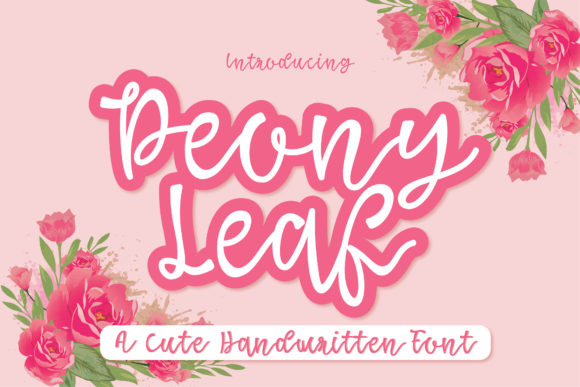
Peony Leaf is a sweet and friendly script font that immediately caught my eye. Its natural and unique style brings a sense of charm and intimacy to any design. The curves are soft, the strokes feel organic, and there’s a subtle elegance that makes it stand out from other script fonts. It’s not overly decorative, which is a big plus—it maintains readability while still offering a distinctive visual flair.
What really sets Peony Leaf apart is its versatility. It works well as a headline font, a logo font, and even as an accent or decorative element. I tested it on a few different applications, including a logo draft, business card mockup, and social media layout. In each case, it brought a consistent warmth that aligned perfectly with the brand’s aesthetic.
Real-World Applications and Observations
I used Peony Leaf on a packaging mockup for a small skincare line. The font looked stunning on product labels, adding a touch of sophistication without overwhelming the design. It worked particularly well on the front panel where the brand name was featured. The soft curves and gentle flow of the letters gave the packaging a handcrafted feel, which was exactly what the client was going for.
On the website header, Peony Leaf added a nice contrast against a clean sans-serif body text. It helped draw attention to the main message while keeping the rest of the content easy to read. I also tested it on Instagram posts and found that it performed well in digital formats. The font maintained its character even at smaller sizes, which is always a consideration for social media use.
One thing I noticed was how well it worked in combination with other typefaces. For example, pairing it with a modern sans-serif font like Montserrat created a balanced look that felt both professional and inviting. This kind of font pairing is essential in branding projects where multiple typefaces are needed to convey different messages within the same brand identity.
Limitations and Considerations
While Peony Leaf is a strong choice for many applications, it’s not without its limitations. As a script font, it can be less ideal for long body text or formal corporate settings. The flowing nature of the letters can sometimes make it harder to read in dense paragraphs, especially at smaller sizes. I would recommend using it more as a display or headline font rather than for extended content.
Another consideration is the font’s licensing. Since Peony Leaf is part of the Script Amp collection, it’s important to review the commercial font licensing terms before using it in client work. Ensuring that the font is appropriately licensed for print-on-demand products, websites, and digital assets is crucial for avoiding legal issues down the line.
Practical Tips and Recommendations
If you’re considering using Peony Leaf in your next branding project, I’d suggest testing it in a variety of contexts before finalizing your choices. Try applying it to logos, headers, social media graphics, and packaging labels to see how it performs in different environments. Pay attention to how it looks at various sizes and in different color schemes.
For those who want to explore font pairings, consider combining Peony Leaf with a serif font like Georgia or a sans-serif font like Helvetica Neue. These combinations can create a visually appealing contrast that enhances the overall design. Also, don’t forget to check if the font includes alternate styles, ligatures, or swashes that might add extra visual interest to your project.
Ultimately, Peony Leaf is a great addition to any designer’s toolkit. It brings a unique personality to branding projects and offers a fresh alternative to more common script fonts. Whether you’re working on a boutique identity, a café refresh, or a creative studio logo system, this font has the potential to elevate your designs with its warm, friendly, and natural style.